Therapy vs Therapeutic
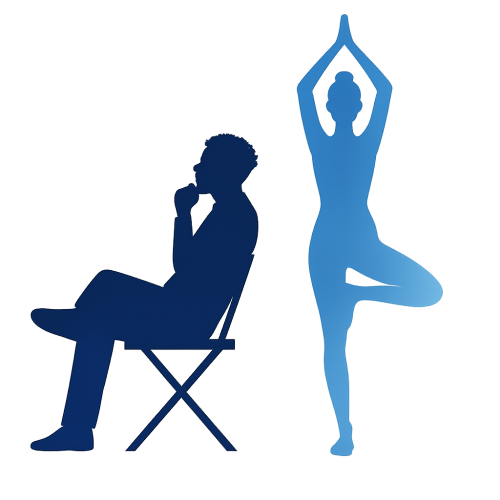
There is a question worth sitting with before we ever enter a therapy room, or perhaps more precisely, a question worth sitting with about the room itself.
What makes something healing? Not what we call it, not how it is credentialled or categorised, but what actually moves in us when something works.
We throw the words "therapy" and "therapeutic" around with a kind of casual interchangeability, as though they were synonyms pointing at the same thing from slightly different angles. But they are not the same. And the confusion between them matters more than it might seem. Not just as a matter of intellectual precision, but as a matter of what we seek, what we trust, and what we allow to touch us.
The distinction is not merely semantic. It carries within it a much older tension: the tension between form and essence, between the container and what it holds.
The Objectivity of Therapy
Therapy, in the formal sense, is a defined thing. It has boundaries, frameworks, ethical codes and regulatory bodies. It is conducted by trained practitioners within recognised modalities; psychoanalysis, cognitive behavioural therapy, person-centred work, somatic approaches, EMDR and so on. Therapy is, in this sense, objective. It exists as a category in the world, outside the inner life of any individual. You can point to it, measure it, register it, accredit it.
This objectivity is not without value - structure creates safety - the container matters. When someone arrives in the midst of fragmentation; carrying grief, trauma, or a self that has come apart at the seams, a clear and boundaried space can itself be part of what heals. Viktor Frankl spoke of the importance of meaning held within form, and the therapeutic frame carries something of that function. It says: this space is held, it is not random, something deliberate is present here.
And yet the map is not the territory. The formal designation of therapy does not guarantee that anything therapeutic is occurring within it. We have all known, or perhaps been, someone who has sat in session after session feeling unseen, unmet, or worse, subtly shaped to fit a theory rather than genuinely encountered as a person. The accreditation is intact, the method is applied, but nothing moves.
The Subjectivity of the Therapeutic
What is therapeutic, by contrast, is deeply, irreducibly subjective. A long walk in rain-soaked bushland, a conversation with someone who truly listens, making bread, playing music alone in a room at midnight, reading a line of poetry that suddenly names something you have carried wordlessly for years. These things do not bear the title of therapy. They are not delivered by a professional within a structured frame - and yet something heals.
The Taoist tradition offers a useful lens here. The Tao te Ching reminds us that the usefulness of a bowl lies in its emptiness - that what is not there is often what does the work. The therapeutic moment may arise precisely in what is unstructured, unscheduled, unintended. It moves like water, finding its way through whatever opening is available, without asking permission.
Jung understood something similar when he wrote about the transcendent function - that capacity for the psyche to move toward wholeness through the encounter between conscious and unconscious, between what is known and what is not yet. The therapeutic, in this sense, is not something we engineer. It is something we allow. And it may arrive through a dream, a synchronistic meeting, a piece of music, or a moment of unexpected stillness as easily as through a structured session.
When Therapy Is Not Therapeutic
This raises a confronting possibility: that therapy - formal, credentialled, professionally delivered therapy - can at times actively prevent healing.
Not because the practitioner lacks skill or care, but because the structure itself can become a kind of defence. The language of pathology can reinforce a person's sense of themselves as broken. The diagnostic frame can reduce the vastness of a human being to a cluster of symptoms. A modality applied without genuine presence can feel, to the person receiving it, like being processed rather than met.
There is also a sociopolitical dimension that is rarely spoken about in clinical contexts. Much of what brings people to therapy is not merely personal. Alienation, meaninglessness, the grinding weight of economic insecurity, the experience of living in systems that do not see your humanity - these are not simply intrapsychic phenomena to be resolved through reframing. When therapy focuses exclusively on the inner world while ignoring the structural conditions that generated the suffering, it risks becoming a tool of accommodation rather than liberation. The person learns to manage their distress within a system that continues to produce it. That is, at best, incomplete. At worst, it is a subtle form of harm.
When the Therapeutic Exceeds Its Container
And so the inverse is equally true: that what is therapeutic often exceeds any formal container we might try to place around it.
The Buddhist concept of sangha - community, fellowship on the path - points to something that no individual therapeutic relationship can fully replicate. The sense of being held not just by a person but by a shared orientation toward awareness, toward the reduction of suffering, toward something larger than the self. There is healing in that belonging which is not reducible to technique.
Advaita Vedanta goes further still. From this perspective, the deepest healing may be the recognition that the separate self who believes it needs to be healed, is itself the source of the suffering. Not in a dismissive way - the pain is real, the wounds are real - but in the sense that beneath the wounds there is something whole that was never injured. When that recognition lands, even briefly, it is profoundly therapeutic - and no credential was required to deliver it.
Holding the Paradox
Perhaps what we are working toward is not a choice between therapy and the therapeutic, but a more honest relationship with both. Formal therapy at its best is a space in which the therapeutic becomes possible - where the structure is permeable enough to allow genuine encounter, where the practitioner is present enough to let something real move between two people, and where the person seeking help is met not as a diagnosis but as a person in process.
And the therapeutic, wherever it arises - in nature, in art, in silence, in community, in the unexpected grace of an ordinary moment - deserves to be taken seriously as healing, even without the institutional stamp of approval.
The question worth carrying is not "Am I in therapy?" but "Is something in me moving toward wholeness?" Sometimes those will coincide. Sometimes they will not.
Where in your life, outside the formal spaces designed for it, does healing quietly arrive? And what would it mean to trust that more?
If you’ve been experiencing some challenges at work that resonate with what’s been described in this article, but would like some more clarity on what’s been happening for you. Download the free Burnout & Disillusionment assessment tool by clicking on the button below - it only takes about 20 minutes.
If you feel ready to address whichever challenge you’re facing and would like more direct 1:1 support and would like to know what support I could offer or what working with me looks like, without any pressure or locked in commitments, you can book afree 20 minute call by clicking on the prompt below.