BLOGS

Therapy vs Therapeutic
There is a question worth sitting with before we ever enter a therapy room, or perhaps more precisely, a question worth sitting with about the room itself.
What makes something healing? Not what we call it, not how it is credentialled or categorised, but what actually moves in us when something works.
We throw the words "therapy" and "therapeutic" around with a kind of casual interchangeability, as though they were synonyms pointing at the same thing from slightly different angles. But they are not the same. And the confusion between them matters more than it might seem. Not just as a matter of intellectual precision, but as a matter of what we seek, what we trust, and what we allow to touch us.
The distinction is not merely semantic. It carries within it a much older tension: the tension between form and essence, between the container and what it holds.
Dialectical Thinking and Mental Health in a World of Change and Contradiction
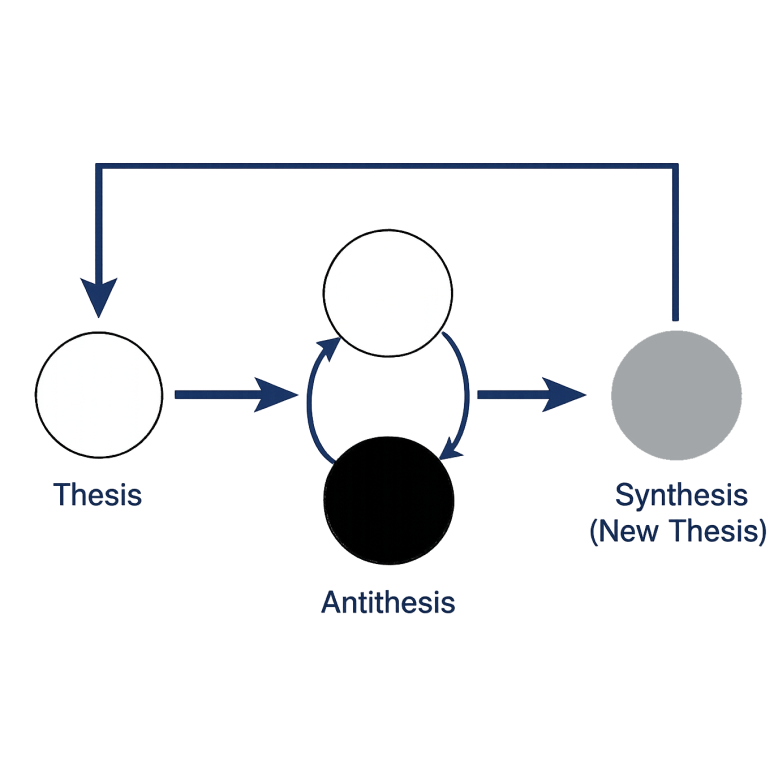
Modern life often pressures us toward certainty, perfection, and fixed identities. We are encouraged to build the “ideal life,” work at the “ideal company,” have the “ideal relationship” or achieve an image of flawless wellbeing. When life inevitably fails to conform to these ideals, distress can emerge. Anxiety, shame, rigidity, hopelessness, and chronic self-criticism often grow in the gap between lived reality and imagined perfection.
Dialectical thinking offers a different way of understanding ourselves and the world. Rather than viewing truth as something static, pure, or absolute, dialectical thought understands reality as dynamic, relational, and constantly evolving. It sees life as a process of movement through tensions, contradictions, and transformation.
This perspective can be deeply supportive for mental health.
Antifragility and Mental Health
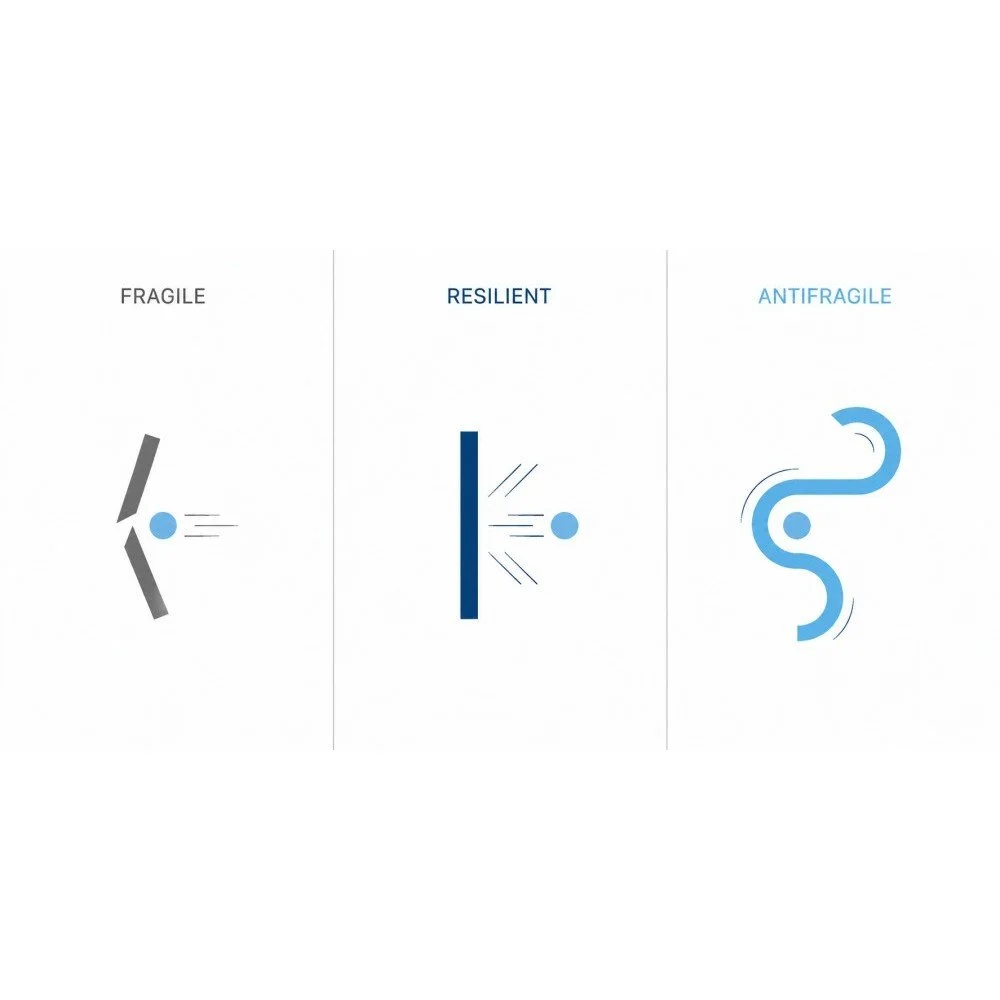
Modern life often feels uncertain, fast moving, and psychologically demanding. Careers shift unexpectedly, relationships change, economies fluctuate, and social pressures can weigh heavily on the mind. In such a world, many people aim simply to cope or survive. Yet there is a deeper and more empowering approach available: antifragility.
Antifragility is more than resilience. It is the capacity to grow stronger through stress, challenge, uncertainty, and disorder.
As a life ethos, it can profoundly transform mental health by helping individuals develop meaning, adaptability, confidence, and inner strength.

Dualism vs Monism: How Our Ontological Framework Impacts Mental Health
Modern society is built upon a largely unexamined assumption about the nature of reality: that it is fundamentally divided. Mind and body, self and other, subject and object, human and nature - these are treated as distinct, often opposing domains. This dualistic ontological framework has shaped not only our scientific and economic systems, but also our inner lives. While it has enabled extraordinary technological and analytical progress, it has also quietly contributed to a deepening sense of fragmentation within the human psyche. Many of the mental health challenges that define our time; anxiety, alienation, depression, and chronic dissatisfaction, can be understood, at least in part, as symptoms of this underlying split.
To see this more clearly, we have to move beyond thinking of mental health purely in biochemical or behavioural terms, and instead consider the philosophical ground from which our experience arises.
Ontology- the study of what exists and how it exists, is not an abstract academic concern, it’s the invisible architecture of perception.
The way we believe reality is structured determines how we relate to ourselves, to others, and to life itself.
Wu Wei: The Quiet Cure to Endless Hustle
Modern life often rewards speed, output, and constant striving. Many people find themselves caught in an endless cycle of doing more, achieving more, and chasing the next milestone. This pursuit is often framed as ambition or success, yet for many it quietly leads to exhaustion, anxiety, and a lingering sense of emptiness.
Within this context, the Taoist principle of Wu Wei offers a very different way of relating to work, ambition, and life itself. Rather than pushing harder, it invites a softer, more attuned approach. One that does not reject effort, but transforms the way effort is expressed.
Wu Wei is often translated as effortless action or non-forcing. At first glance, this can be misunderstood as passivity or laziness. In reality, it points to a state of alignment where actions arise naturally, without strain or resistance. It is the difference between sailing and rowing.
When applied to modern career culture, Wu Wei becomes a quiet but profound counterbalance to the pressures of hustle culture and the relentless pursuit of material accumulation.

Burnout in the Age of Endless Growth: How Our Economic Model Shapes Disillusionment amongst Workers
Across industries, many employees quietly carry a deep exhaustion that goes beyond long hours or tight deadlines. It is a fatigue of meaning. A weariness not only of work, but of what work has become.
Burnout and disillusionment are often framed as individual problems; failures of resilience, mindset, or personal boundaries. Yet when a pattern repeats itself across sectors, countries, and generations, we must ask a broader question: what if this exhaustion is not merely personal, but structural?
The modern capitalist economic system (particularly in its contemporary, shareholder-driven form) plays a significant role in shaping the conditions that give rise to widespread burnout and disillusionment. At its core lies a simple imperative: profits must grow. Not remain stable. Not be sufficient. Endless growth. Quarter after quarter, year after year.

Career Burnout & Career Disillusionment: Why So Many Professionals Feel Stuck
Understanding Career Burnout and Disillusionment
Why work that once felt meaningful can begin to feel heavy, hollow, or quietly draining
Many people reach a point in their working lives where something no longer feels right, even if, on paper, everything looks fine. The role is stable. The income is adequate. The responsibilities are familiar. Yet underneath, there’s exhaustion, restlessness, or a growing sense of inner resistance.
Two experiences often sit at the centre of this quiet struggle: career burnout and career disillusionment. They are related, but not the same and understanding the difference can be a powerful first step toward clarity.